
Social fragmentation and reconnection.
Quincula Institute studies the social problems behind disconnection: control and coercion, imbalances of power, and the erosion of trust and respect in families, close relationships, groups, and institutions.
Our work draws on social network science, network theory, public health, and social neuroscience. Its purpose is reconnection. A problem that stays hidden is hard to repair, so we start by naming it precisely.
Notes from the lab.
Quincula Lab Updates: a note when there is something worth sending.
By subscribing, you agree to receive Quincula Lab Updates emails from Quincula Institute, 1055 West Georgia Street, Suite 2480, Vancouver, BC V6E 3P3, Canada. Contact: [email protected]. You can unsubscribe at any time. See our Privacy Policy.

Five research questions.
Our work is organized around five questions about network structure and what it does to people, families, and institutions.
-
How does network structure determine who gets access to care, information, and opportunity?
Access is rarely just about what resources exist. It depends on where people sit in a network, who connects them to whom, and where the structural gaps are.
Methods: social network analysis, epidemiological and public health data, qualitative interviews.
-
How does control operate through a network rather than within a single relationship?
Coercive control works by isolating people, reshaping who they’re connected to, and recruiting third parties who either protect or enable. We study control as a feature of network structure, drawing on power-dependence theory and brokerage.
Methods: qualitative case analysis, network mapping, computational modeling.
-
What makes a social or institutional network resilient, and what makes it fragment?
Families, care systems, and institutions can absorb disruption or break apart when key ties or nodes fail. We study topology and redundancy, how failures cascade, and the role of well-connected, well-rooted nodes that bridge separate communities.
Methods: network topology and robustness analysis, cascade simulation, institutional case studies.
-
How do behaviors, beliefs, and norms ripple through the connective tissue of society?
Social ripple behaviors: how patterns spread through families, workplaces, and institutions, including shared reality, collective memory, groupthink, and why people sometimes act against their own interests.
Methods: diffusion and contagion models, survey and qualitative methods.
-
How do brain networks and social networks shape each other?
Computational social neuroscience: how a person’s position in a social network relates to cognition and well-being, and how tools from brain connectomics, like graph theory and persistent homology, can show hidden structure in social systems.
Methods: neuroimaging (diffusion MRI), graph theory, topological data analysis.
We share this work through research, seminars, workshops, and public education. It is not therapy or clinical care.
Building Discernment: Valued, or Just Useful?
Session 1 of 4 in the Building Discernment Series.
Respect, trust, and how to tell when recognition is being used as a carrot, at work and at home.
A 90-minute live seminar on the network science of respect and trust. Education, not therapy.
Saturday, November 28, 2026 · 10:00–11:30 AM ET · Live on Whereby · $27 USD
Reserve a seatSeminars and workshops
- Introduction to Relational Well-Being (Level 1) · Seminar
- Intro to Social Network Analysis · Seminar
- Power Asymmetry and Group Dynamics · Seminar
- How to Get Out of Extractionary Cycles · Seminar
- Door to Value: A Women's Brain Training Intensive · Workshop
- The Architecture of No: How Your Brain Resists Boundaries and How to Train It to Hold Them · Seminar
- Coercive Dynamics in Families and Intimate Relationships · Seminar
- The Social Network Audit · Workshop
- Mapping the Exit: The Extractionary Cycles Workshop · Workshop

Coming soon.
Papers will be listed here as they are published.
Social Fabric Capital.
Conversations with researchers, investors, entrepreneurs, and artists, hosted by Dr. Anna Maria Matziorinis. Each guest is a person, and the episode page shows the ties between them.
An interactive map of every guest and the ties between them.
Each node is a guest, each edge a shared idea or relationship. Explore the graph, tap any node, and listen to the episode there.
Listen to the podcast

Founder
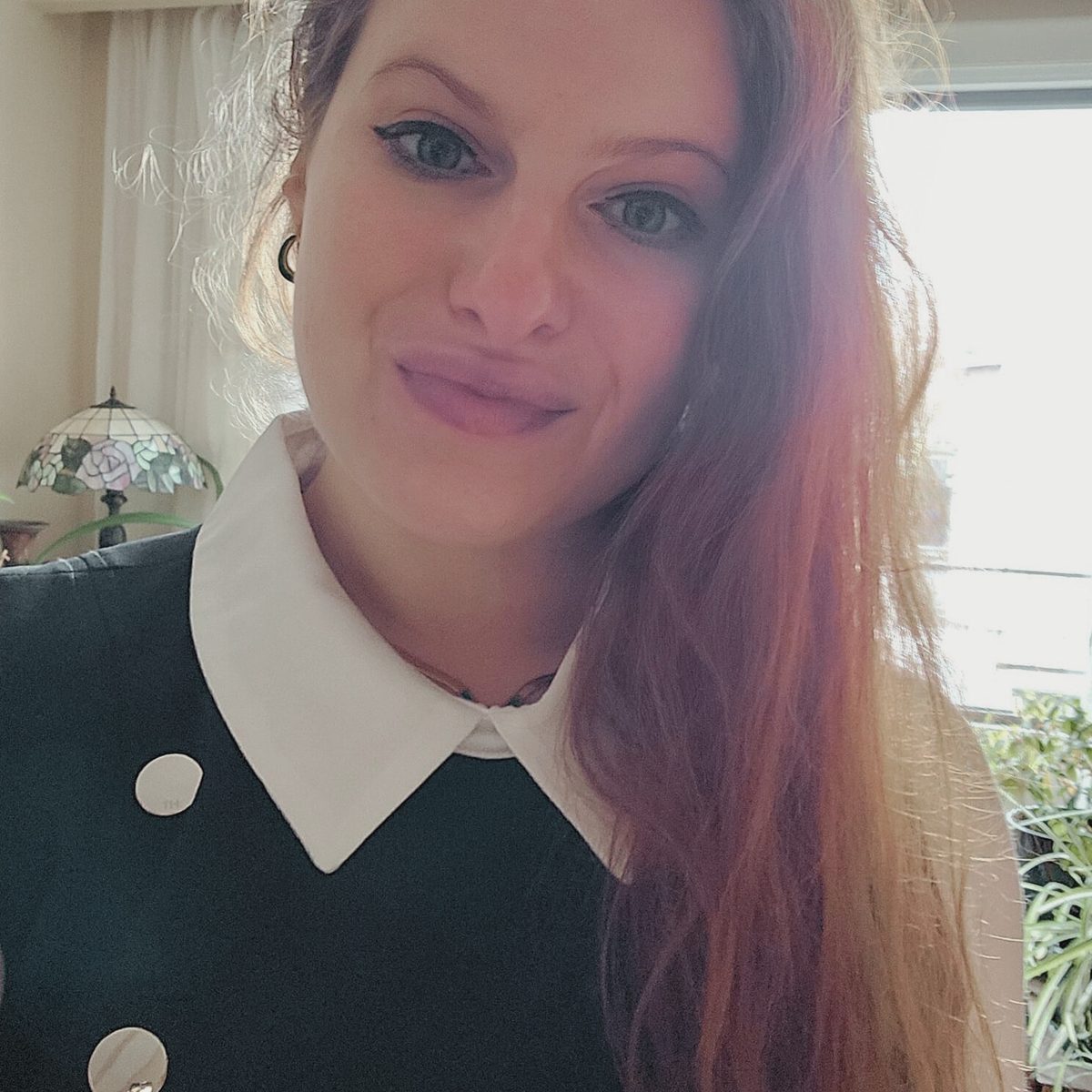
Dr. Anna Maria Matziorinis is the Founder and Director of Quincula Institute, a non-soliciting non-profit research institute, federally incorporated and registered in BC. She founded it to study the social problems behind disconnection in families, close relationships, groups, and institutions. The purpose of that research is reconnection.
She is currently a visiting scholar at the University of Bergen (UiB) in Norway. Her research there belongs to the university and is separate from the institute. What she brings to the institute is close attention to connection itself: what holds, what wears down, and what it costs a person when the people around them can no longer reach one another.
Anna Maria also shares her science with the public on Instagram at @dr.annamariamatziorinis.